The 8-Week PSLE Countdown: A Practical Revision Roadmap for P6 Success
Navigate the final two months before the PSLE with a structured, stress-free revision plan designed to build confidence and mastery across all four subjects.
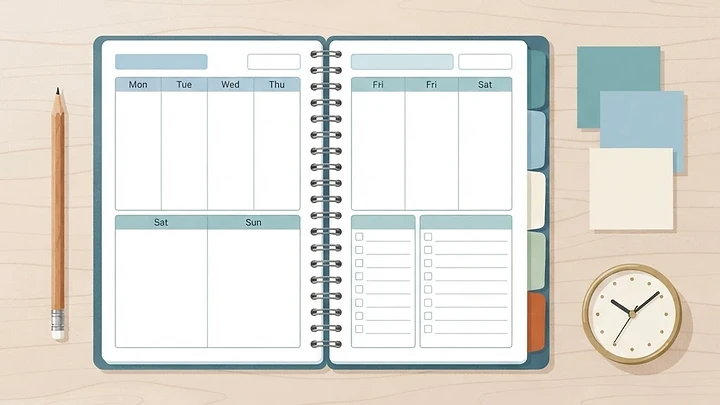
Preparing for the Final Stretch
The Primary School Leaving Examination (PSLE) is a significant milestone in your child's educational journey. As the 2026 examination period approaches, the goal is not to cram, but to consolidate knowledge and refine exam techniques. An 8-week countdown provides the perfect window to transition from learning new concepts to mastering the art of the exam.
The 8-Week Revision Framework
This schedule assumes a balanced approach, prioritising active recall and targeted practice over passive reading.
Phase 1: Diagnosis and Foundation (Weeks 1-2)
- Week 1: The Diagnostic Audit. Have your child complete one full-length past-year paper for each subject under timed conditions. Use this to identify 'leaky' topics—areas where marks are consistently lost due to conceptual gaps rather than careless errors.
- Week 2: The Strategic Timetable. Build a weekly routine. Allocate roughly 1.5 to 2 hours of focused revision on weekdays and 3 to 4 hours on weekends. Use a 40/35/25 split: 40% of time for your child's weakest subject, 35% for moderate subjects, and 25% for their strongest subject.
Phase 2: Targeted Consolidation (Weeks 3-5)
- Week 3: Deep Dive into Weaknesses. Focus exclusively on the topics identified in Week 1. For Math, revisit specific heuristics; for Science, review the 'Cycles' and 'Systems' themes; for English, focus on Synthesis & Transformation rules.
- Week 4: Thematic Mastery. Shift to thematic revision. Instead of random practice, group questions by topic. This helps the brain build stronger neural connections for specific question types.
- Week 5: Introduction of Timed Drills. Begin incorporating timed sections. Use a stopwatch to simulate the pressure of the actual exam hall. This builds 'exam stamina' and helps your child learn to skip difficult questions to return to them later.
Phase 3: Exam Simulation and Refinement (Weeks 6-8)
- Week 6: Full Mock Papers. Attempt full-length papers under strict exam conditions. Ensure the environment is quiet and free from distractions.
- Week 7: The Review Loop. Spend 70% of your time reviewing mistakes from Week 6. Maintain a 'Mistake Notebook' to track recurring errors. Understanding why an answer is wrong is more valuable than doing ten new practice papers.
- Week 8: Light Consolidation. Focus on reviewing your 'Mistake Notebook' and light revision of key formulas or vocabulary. Prioritise sleep and mental well-being to ensure your child is fresh for the actual exam dates.
Balancing Revision with Well-being
Success in the PSLE is not just about academic rigour; it is about sustainability.
- Scheduled Rest: Include mandatory breaks every 45-60 minutes. Physical activity or a short walk can significantly improve focus.
- Family Time: Maintain a normal family routine. A calm home environment reduces anxiety and helps your child perform at their best.
- Sleep Hygiene: Ensure your child gets 8-9 hours of sleep. A tired brain cannot perform complex reasoning or application tasks effectively.
Key Takeaways for Parents
- Quality over Quantity: It is better to complete one paper and review it thoroughly than to complete three papers without checking the solutions.
- Stay Calm: Your child will mirror your energy. Approach the revision process as a supportive coach rather than an examiner.
- Track Progress: Use a simple dashboard or checklist to mark off completed topics. Seeing progress provides a psychological boost.
Frequently Asked Questions
Q: What if my child falls behind the schedule? A: Do not panic. Adjust the plan by prioritising the most high-yield topics. It is better to master 80% of the syllabus thoroughly than to rush through 100% with poor understanding.
Q: How much time should be spent on Mother Tongue? A: Mother Tongue requires consistent, smaller blocks of time. Aim for 15-20% of your weekly revision time, focusing on composition planning and vocabulary usage.
Q: When should we stop doing new practice papers? A: Stop doing new, high-stress papers about 3-4 days before the first paper. Use the final days for light review and mental preparation.
Looking for the right tutor?
Browse verified tutors and tuition centres across Singapore.